
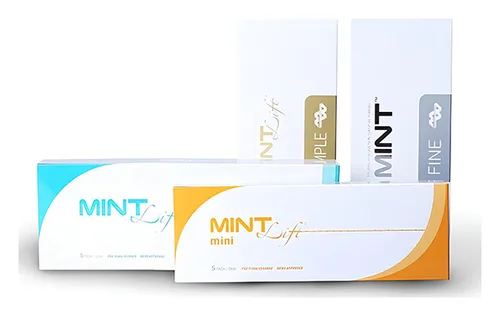
Thread lifting with Blue Rose, Mint and Jamber threads
The thread lift pain level is generally described as a sharp sting while local anesthesia goes in, followed by pressure and tugging as each barbed thread is placed during a procedure of about 30 minutes. Summit Clinic in Seoul performs thread lifts under local anesthesia, and how much you feel varies by person and by area.
How local anesthesia numbs a thread lift
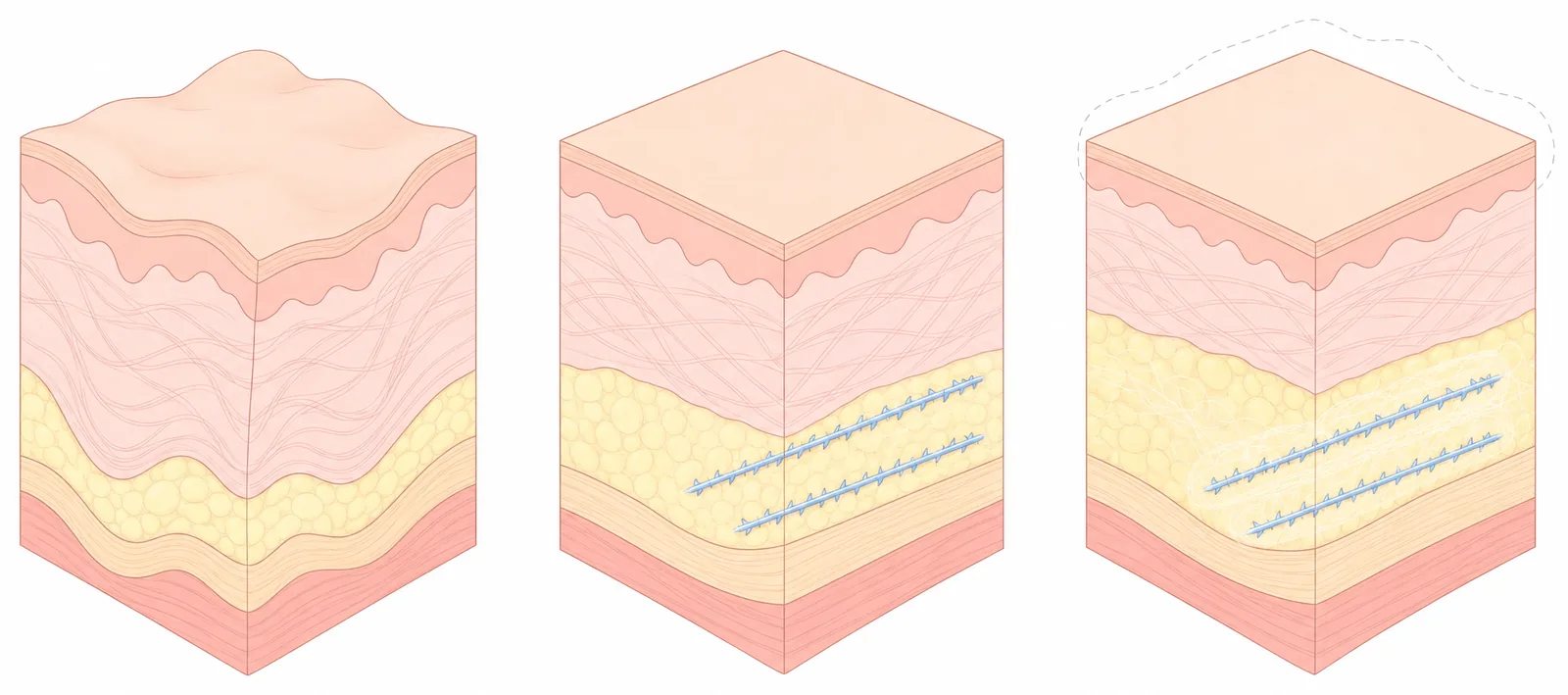
A local anesthetic is a medicine that stops nerves in a small area from passing pain signals to the brain. For threads it is generally injected at each entry point and along the line the thread will follow, so the numbness covers the whole track. The injection is the part people tend to notice most: a quick prick and a burning feeling that fades within moments as the medicine spreads.
Local anesthesia blocks pain but not touch or pressure. You stay awake, can talk to the doctor and will still sense the cannula moving and the thread being drawn tight. Expecting that sensation makes it less surprising when it comes.
The doctor who plans and performs it
Swipe to see all 4 doctorsUse the arrows to see all 4 doctors

- Resident, Myongji Hospital
- Chief Epidemiological Investigator, Incheon Metropolitan City
- Director, Yeonpyeong Health Center
- Bachelor of Medicine, Kyung Hee University
- Internship, Kyung Hee University Hospital
- Full Member, Korean Association of Aesthetic Medicine
- Full Member, Korean Society of Obesity & Aesthetic Medicine

- Member, Korean Society for Obesity
- Member, Korean Society of Lifting
- Member, Korean Society of Aesthetic Surgery & Laser Medicine
- Member, Korean Society for Obesity
- Member, Korean Society of Aesthetic Surgery & Laser Medicine
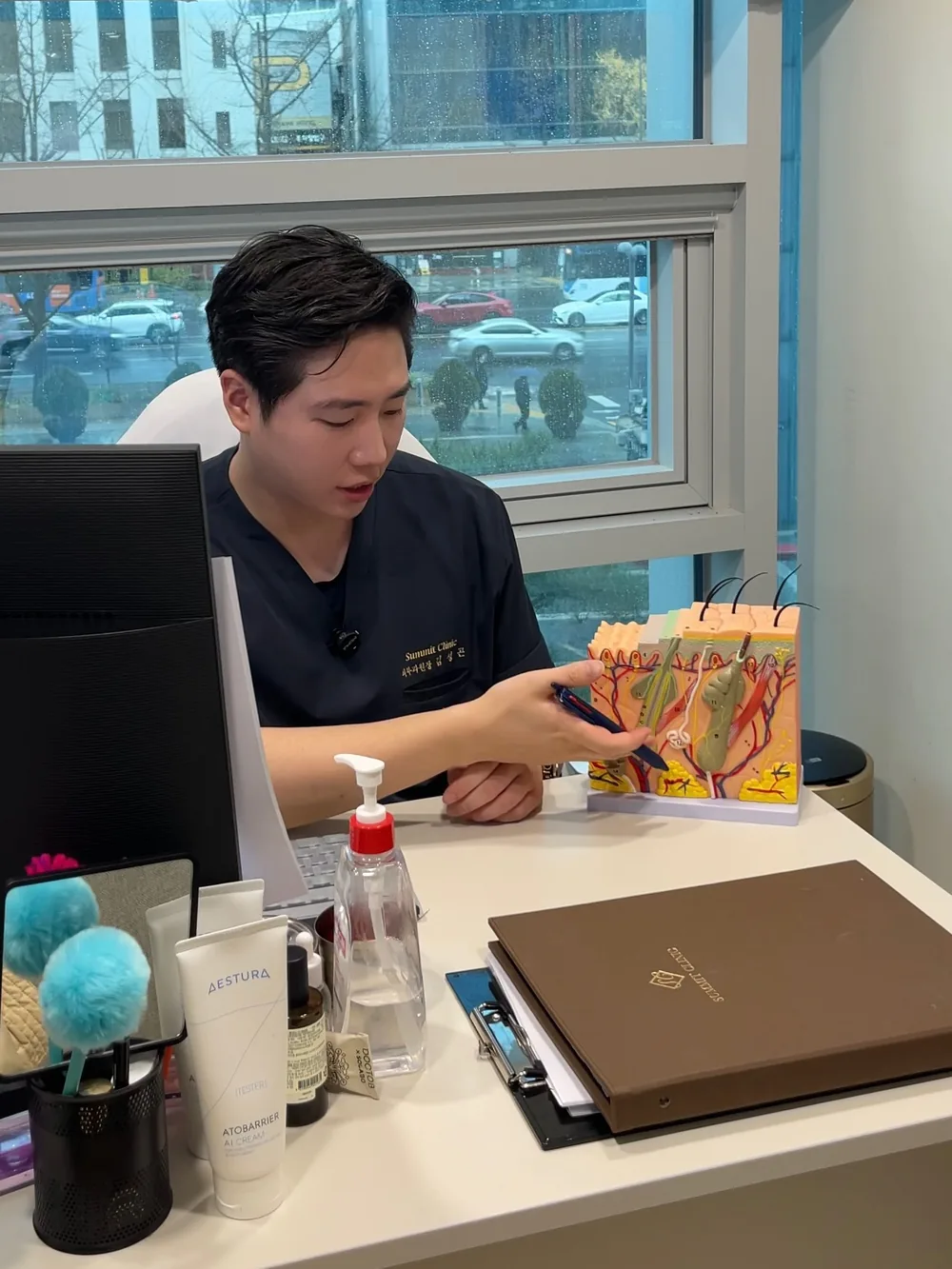
Your doctor plans your treatment one-to-one and performs it personally.
Meet all four doctorsThread lift pain at each stage of the visit
These descriptions are general and differ from person to person:
| Stage | What you may feel |
|---|---|
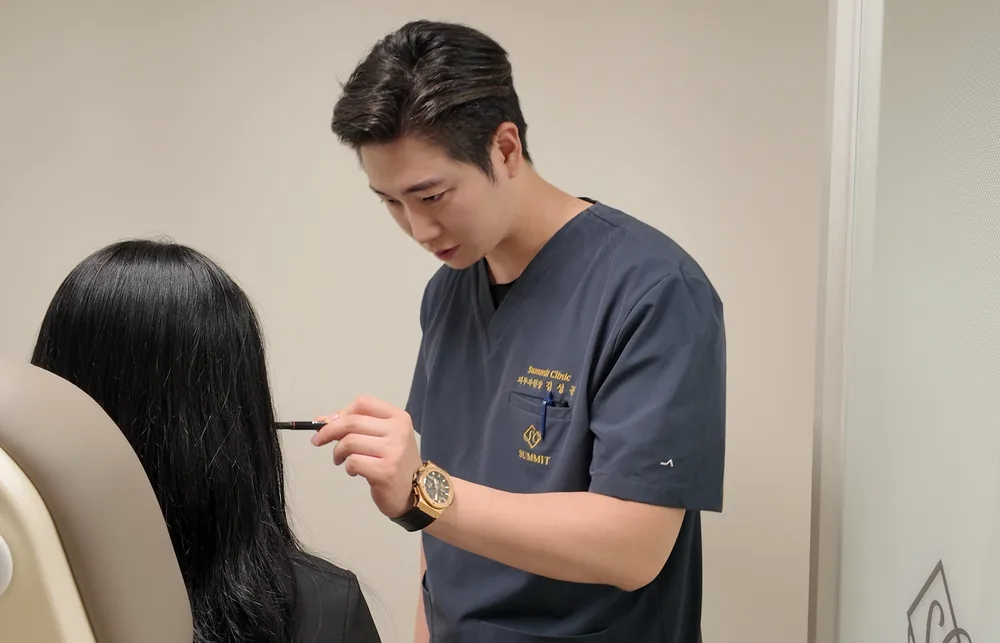
| Skin analysis and marking | Nothing beyond a pen on the skin |
| Local anesthetic injections | A prick and brief burning at each point |
| Cannula and thread insertion | Pressure and a gliding sensation under the skin |
| Tightening the thread | A firm tug as the barbs catch the tissue |
| Trimming and cleaning | Little or nothing |
Areas over bone, such as the jawline and the cheekbone, can feel more intense than softer parts of the cheek. If one spot is still sensitive, say so: more anesthetic can generally be added there before the doctor continues.
Thread lift pain after the anesthetic wears off
Numbness generally lasts a few hours. As it fades, the treated areas can feel sore, tight and tender to touch, a little like a bruise. Chewing, yawning and smiling widely may tug at the threads, and some people find sleeping on their side uncomfortable for the first nights.
This soreness generally eases over the following days as swelling settles, at a pace that differs between people. A cold pack wrapped in cloth and held lightly on the area, soft food and a raised pillow are common general measures. Ask the doctor before you leave which pain reliever suits you, since some medicines can make bruising more likely.
When thread lift pain needs attention
Soreness that slowly fades is expected; pain that grows is different. In a retrospective study of 160 people who had barbed PDO threads, early complications included threads showing at the surface, redness, infection and skin dimpling, and infection accounted for 6.2% (Bertossi et al., 2018). A six-month study of barbed PDO sutures for facial recontouring judged them safe and effective with tracked measurements, which shows that problems are not the usual course (Preibisz et al., 2021). Contact a doctor if you notice:
- Pain that gets stronger after the first few days instead of easing
- Heat, spreading redness or discharge at an entry point
- A sharp, poking feeling where a thread end sits close to the surface
- Fever, or swelling on one side that keeps increasing
Once you are back home, send the clinic a photo before anything else. Fever or fast-spreading redness needs a local doctor straight away.
Research behind this page
- Effectiveness, Longevity, and Complications of Facelift by Barbed Suture InsertionAesthetic Surgery Journal · 2018doi:10.1093/asj/sjy042
Retrospective study of 160 barbed PDO thread lifts: early complications 34% (extrusion, erythema, infection 6.2%, dimpling); lift faded by one year.
- Barbed Polydioxanone Sutures for Face Recontouring: Six-Month Safety and Effectiveness Data Supported by Objective Markerless Tracking AnalysisAesthetic Surgery Journal · 2021doi:10.1093/asj/sjab359
Six-month cohort with markerless tracking: barbed PDO sutures for face recontouring were safe and effective, with results lasting at least 24 weeks.
Questions about thread lift pain
How much does a thread lift hurt?
Most of what you feel is a sting during the anesthetic injections, then pressure and tugging while threads are placed. With local anesthesia working, sharp pain during insertion is generally limited. Sensitivity differs between people and areas, and soreness for a few days afterwards is expected.
What anesthesia is used for a thread lift?
The clinic's treatment guide lists local anesthesia. It is injected where the threads enter and along their planned paths, so you stay awake throughout and can speak with the doctor. The guide does not list sedation or general anesthesia for this procedure.
Which areas feel most sensitive during threads?
Spots close to bone, such as along the jawline and over the cheekbone, can feel stronger than the fleshy middle of the cheek. Threads under the chin can feel tight when you swallow afterwards. Tell the doctor during treatment if any area still feels sharp.
How long is my face sore after a thread lift?
Tenderness, tightness and a pulling feeling when chewing or smiling generally ease over several days, though the timing varies by person. Pain that keeps getting worse, or comes with heat and redness, is not the normal pattern and should be checked.
Can severe pain after threads mean infection?
It can. Infection is one of the early complications reported after barbed threads, and it shows as rising pain with heat, redness or discharge. Message the clinic with a photo, and if you have a fever or redness that spreads quickly, see a doctor near you at once.
Can I tell the doctor in English if something hurts?
Yes. Through the clinic's English interpreter you can say during the procedure that a spot is still sensitive, and the doctor can numb it further. Any worries about needles can be raised at the consultation beforehand.
Who places the threads and manages pain on the day?
Thread lifts at Summit Clinic are done by licensed Korean physicians. The doctor who draws your thread lines also gives the local anesthesia and inserts each thread, so the person adjusting your comfort is the one doing the procedure.