

Thread lifting with Blue Rose, Mint and Jamber threads
A thread lift lasts about 1 to 2 years according to the treatment guide of Summit Clinic in Seoul, yet published follow-ups of barbed PDO threads describe the lifted position softening noticeably somewhere between 6 and 12 months. Both are averages; on your own face the span depends on the thread, the weight of the tissue, your age and how your skin heals.
Why a thread lift has two different timelines
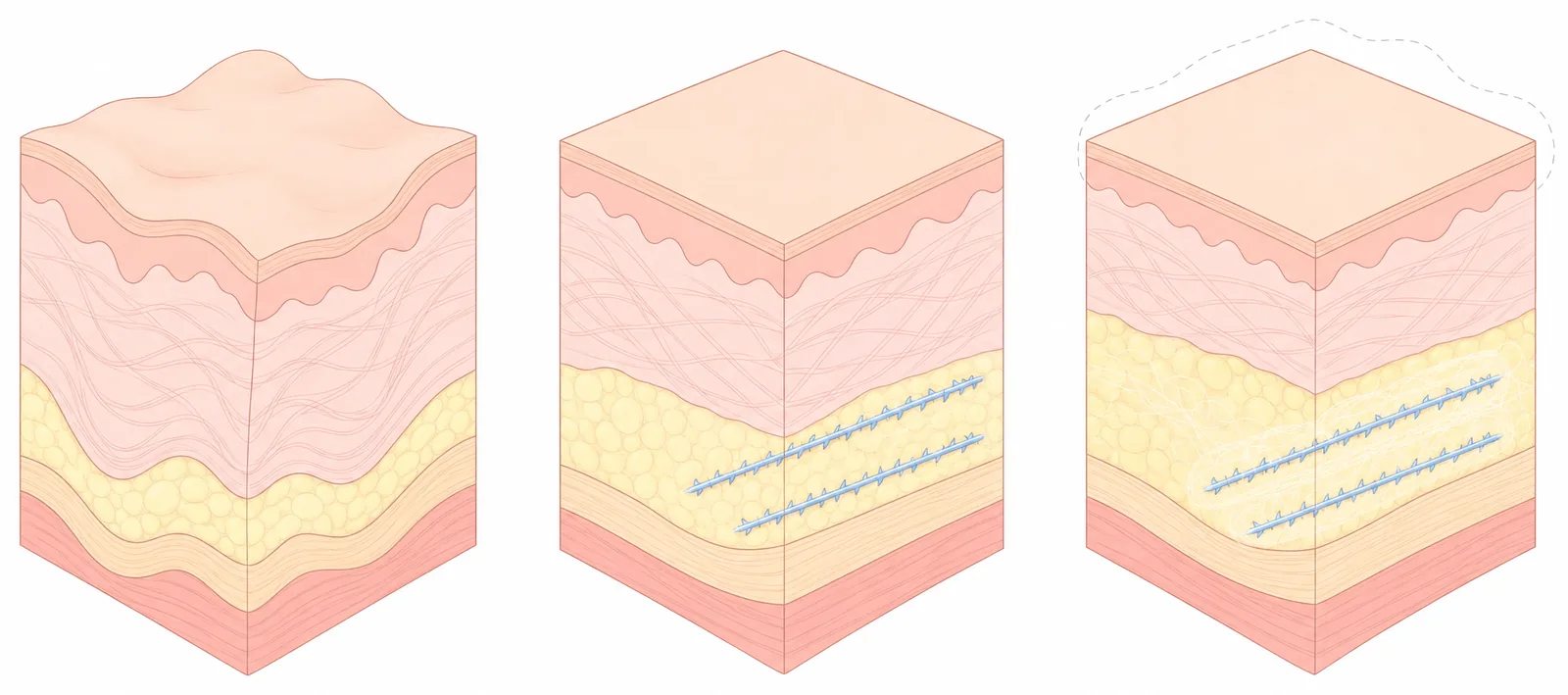
Two things happen after threads go in, and they run on separate clocks. The first is mechanical: barbs or cones catch the soft tissue and hold it higher along each vector. That hold is strongest in the early weeks and eases as the thread material breaks down. The second is biological: the body lays down a thin sheath of new collagen around each thread track, which can keep some firmness after the visible lift has relaxed.
A clinic figure and a study figure can therefore describe different things. One may reflect how long people stay satisfied with their contour, the other how long a measured lift stays above its starting point. The evidence itself is thin. A 2023 systematic review of PDO threads called them a scarcely studied technique and found large gaps in method and in proof that threads are placed accurately, so no single number is reliable (Contreras et al., 2023).
The doctor who plans and performs it
Swipe to see all 4 doctorsUse the arrows to see all 4 doctors

- Resident, Myongji Hospital
- Chief Epidemiological Investigator, Incheon Metropolitan City
- Director, Yeonpyeong Health Center
- Bachelor of Medicine, Kyung Hee University
- Internship, Kyung Hee University Hospital
- Full Member, Korean Association of Aesthetic Medicine
- Full Member, Korean Society of Obesity & Aesthetic Medicine

- Member, Korean Society for Obesity
- Member, Korean Society of Lifting
- Member, Korean Society of Aesthetic Surgery & Laser Medicine
- Member, Korean Society for Obesity
- Member, Korean Society of Aesthetic Surgery & Laser Medicine
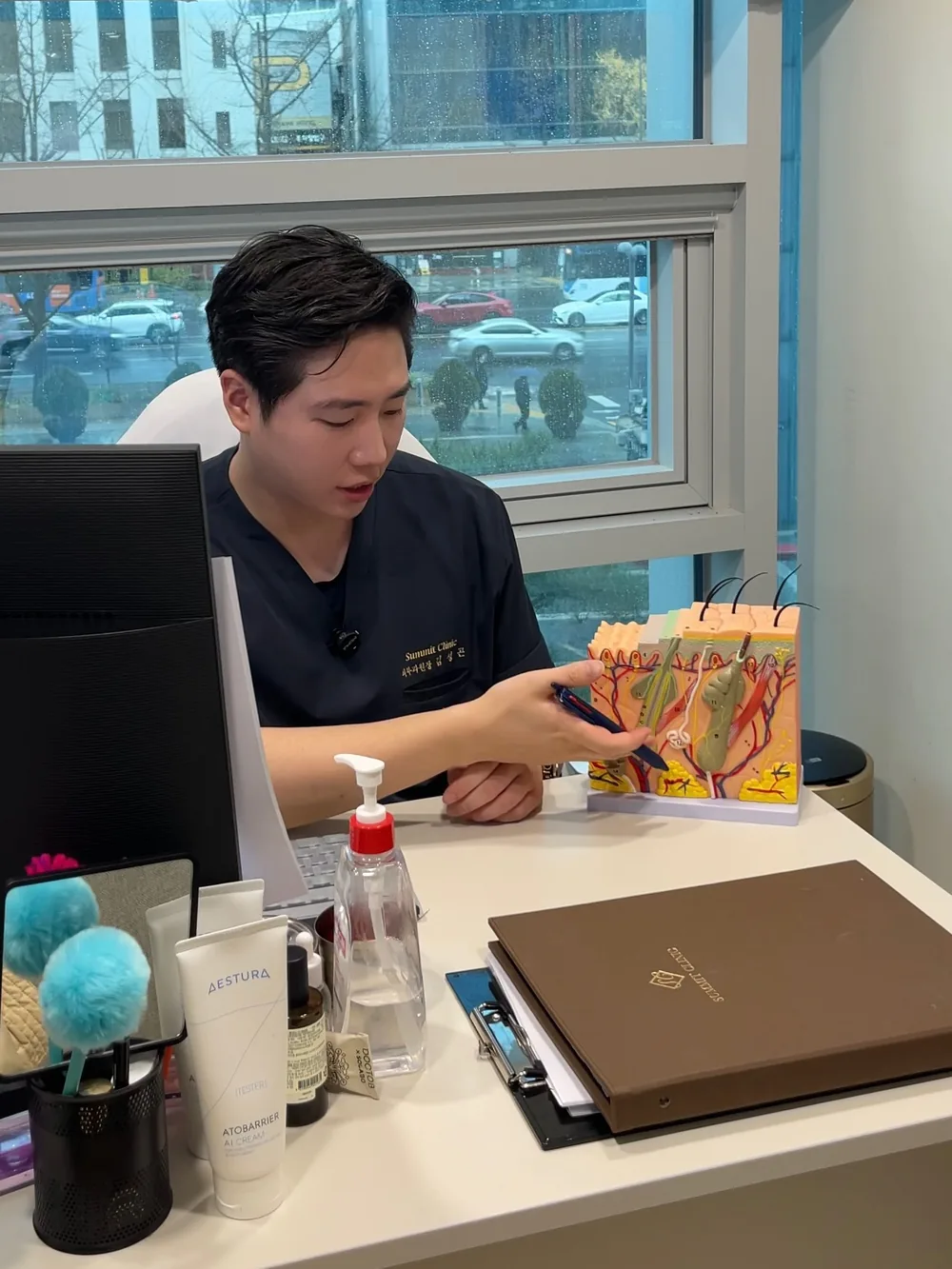
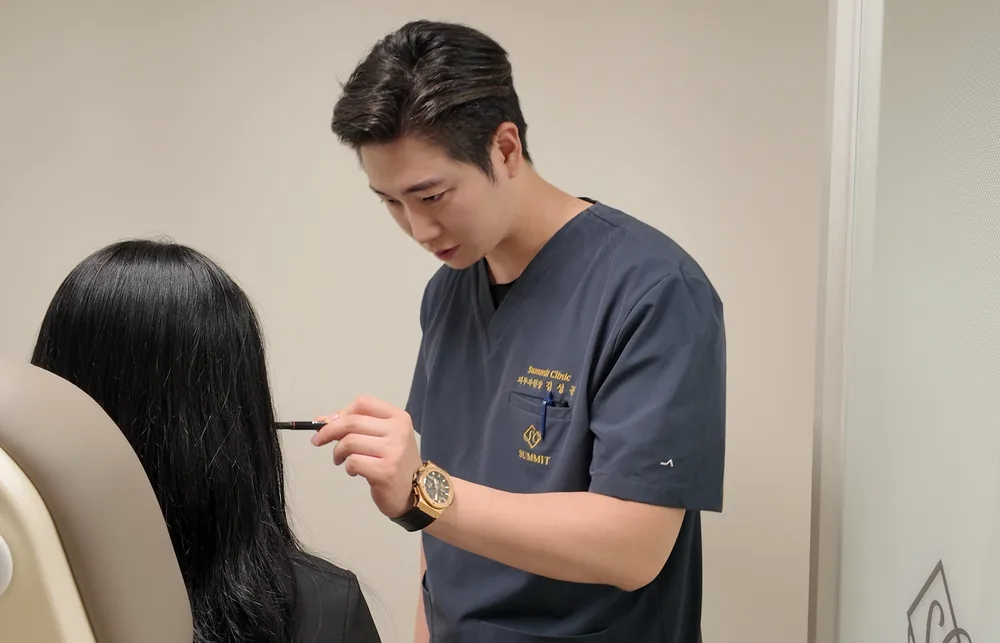
Your doctor plans your treatment one-to-one and performs it personally.
Meet all four doctorsWhat changes how long a thread lift holds
The doctor weighs these factors when explaining what to expect from your plan:
- Thread design. Cog threads carry barbs or cones that grip tissue; smooth threads add support to the skin but give little lift on their own.
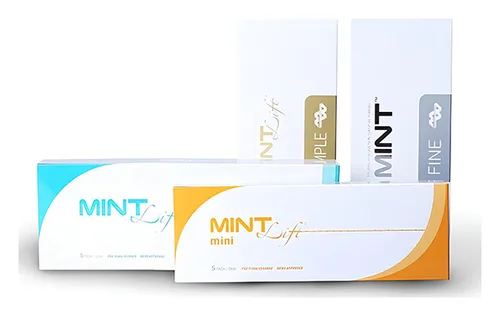
- Thread material. Mint threads are polydioxanone (PDO), which the body absorbs over months. Materials that break down more slowly can keep their grip a little longer.
- Tissue weight. Heavy cheeks and deep jowls pull harder on each thread than light tissue does.
- Skin and age. Thin skin that has lost much of its elasticity tends to relax back sooner.
- Movement in the early weeks. Wide yawning, hard chewing and firm facial massage can loosen the grip before the tissue has settled around the thread.
Collagen formation is one reason studies keep looking at threads with cones. In a small tissue study, absorbable sutures made of PLLA and PLGA with cones stimulated new collagen right around the thread and cone paths, and the authors linked that, along with the repositioning, to the clinical improvement they saw (Goldberg, 2020). It was a histology study of a few people, so it explains a mechanism and does not set a duration.
Thread lift longevity at a glance
| Clinic's treatment guide | About 1 to 2 years |
|---|---|
| Published follow-ups | Lift generally softens between 6 and 12 months |
| Mint threads | PDO, absorbed by the body over months |
| Repeat procedure | Typically considered once the effect fades; varies by person |
| Procedure time | About 30 minutes under local anesthesia, per the clinic |

Planning a repeat thread lift
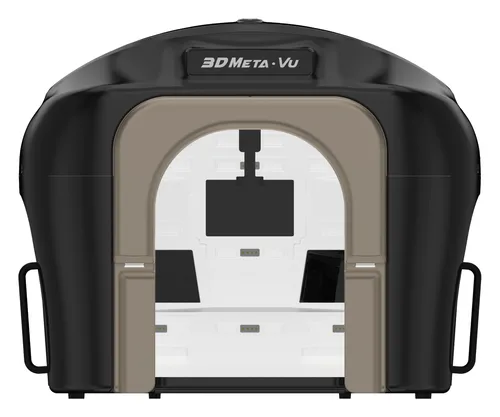
A thread lift is typically a single procedure, and a repeat is considered once the effect has faded enough to bother you. There is no fixed calendar for it. When you come back, the doctor takes new 3D Meta-Vu images and compares them with the earlier ones, which shows where tissue has dropped again and where it has held.
The second plan does not have to copy the first. Fewer lines may be enough if collagen along the old tracks still gives support, or the vectors may move to follow how your face has changed. Some people pair the repeat with a skin booster for the surface of the skin, which works on a different layer from the threads.

Timing thread lift results around a trip to Seoul
The lifted shape looks most defined in the first weeks, once swelling has gone, and then relaxes gradually. If you are timing the result for an event, that early window matters more than the total span. For a visit to Seoul, the clinic's location between Gwanghwamun Square and City Hall makes a follow-up on a later trip easy to fit in. Before treatment, it helps to agree on:
- Which thread type goes in each area and what it is made of
- How the doctor will judge, on a later visit, whether a repeat makes sense
- How to send photos from home if the lift seems to fade early

Research behind this page
- Using PDO threads: A scarcely studied rejuvenation technique. Case report and systematic reviewJournal of Cosmetic Dermatology · 2023doi:10.1111/jocd.15709
Case report and systematic review: PDO thread rejuvenation is scarcely studied, with large gaps in theory, method and evidence on accurate placement.
- Stimulation of collagenesis by poly‐L‐lactic acid (PLLA) and ‐glycolide polymer (PLGA)‐containing absorbable suspension suture and parallel sustained clinical benefitJournal of Cosmetic Dermatology · 2020doi:10.1111/jocd.13371
Small histology study: PLLA/PLGA absorbable suspension sutures with cones stimulated collagen around thread and cone paths, offered as a mechanism for clinical benefit.
How long thread lifts last: common questions
How long does a thread facelift usually last?
Summit Clinic's own guide puts the span at roughly 1 to 2 years. Published studies of barbed PDO threads report the lift softening between 6 and 12 months, and some find little measurable lift left after a year. The span depends on thread type, tissue weight and age, and varies by person.
Do cog threads hold the lift longer?
Cog threads are the barbed or coned kind, and that grip is what produces a lift, so they are the type used for lifting. How long the grip lasts still depends on the material and your tissue. Reviews describe the research on threads as limited, so no reliable duration exists for cogs alone.
Do the threads stay in my face for good?
Mint threads are polydioxanone, which the body absorbs over months, leaving a thin layer of collagen along each track. The custom set also uses Blue Rose and Jamber threads; if you want to know what each one is made of, ask during your consultation before agreeing to the plan.
When can I have a second thread lift?
There is no set interval. A repeat is typically considered once the effect has faded, and the doctor compares new skin analysis images with your earlier ones before suggesting how many threads and which vectors to use. How soon that point comes differs from one face to the next.
Who decides how long my lift is likely to last?
Licensed Korean physicians at Summit Clinic plan each thread lift and place the threads themselves. The doctor who reads your skin analysis explains which factors may shorten or extend your result, based on tissue weight, skin quality and the threads chosen for each area.
Can I ask questions about longevity in English?
Yes. The clinic employs an English interpreter, who can help you go through the clinic's figure, the study figures and what they mean for your face before treatment. Questions can also be sent on WhatsApp ahead of your trip, and the clinic answers as soon as possible.
My lift seems to fade early after I get home. What should I do?
Message the clinic first with clear photos from the front and both sides, taken in even light. The doctor can compare them with your treatment-day images and tell you whether the change looks like normal settling. Sudden swelling, heat or a growing lump should be seen by a local doctor promptly.